

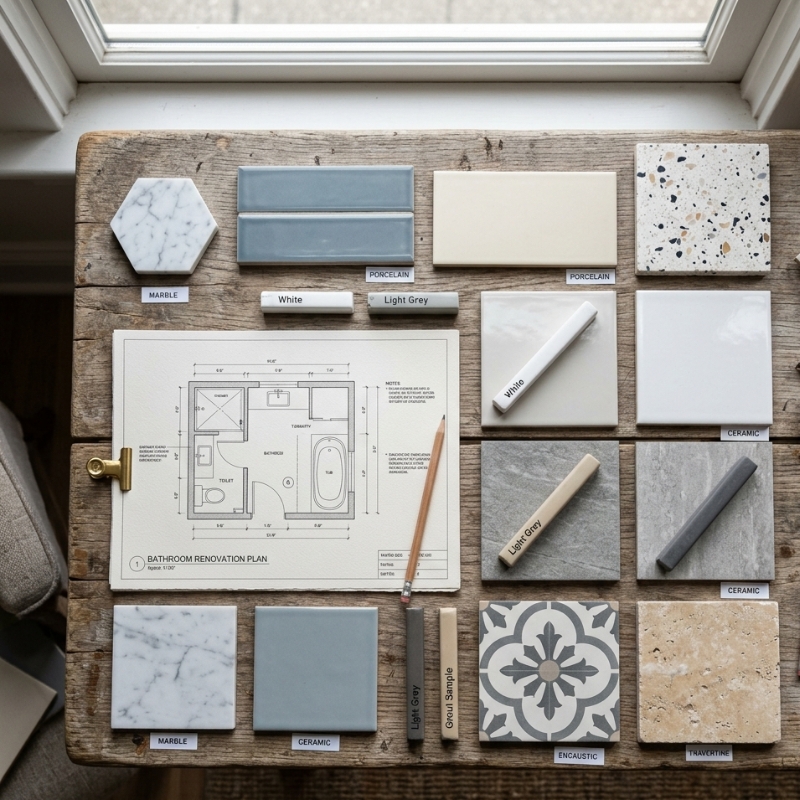
Picking tiles can feel like being a kid in a sweet shop. You’ve got shiny porcelain, timeless ceramic, and unique natural stone, all begging for a spot in your new bathroom. But heads up — what looks perfect under showroom lights might turn into a headache with daily showers, soap spills, and kids who think water on the floor is totally okay.
Before you finalize your pick, it’s worth knowing how these different tiles handle Sydney’s hot, sticky summers, chilly winters, and the hustle of city life. We’ll break down porcelain, ceramic, and natural stone to see how they rank on water-resistance, slip safety, upkeep, and design choices. Feeling like tackling a project yourself? We’ll hint at when to go it alone, when to call in a pro, and how small stuff — like grout lines — can really affect how long everything lasts. If you’re diving into a big overhaul, our in-depth read on bathroom tiling options will be super handy
1. Get to Know the Differences
1.1 How These Tiles Are Born
- Porcelain: It’s a type of ceramic made with fine clay and fired at really high temperatures. That makes it dense and not very porous.
- Ceramic: This uses coarser clay and lower heat, which leaves it a bit porous.
- Natural Stone: These are materials like marble or slate cut into tiles. They’re not fired, so each piece is one-of-a-kind.
1.2 Why Manufacturing Matters
How dense a tile is can affect how much water it absorbs, how it handles chips, and how tough it is overall. In a bathroom, less porous tiles usually mean fewer moisture problems, but density can make cutting and drilling a pain, which ups the cost and time for installing them.
2. Quick Performance Rundown
Here’s a fast comparison before we dig deeper:
| Tile Type | Water Absorption | Slip Ratings | Scratch/Chip Resistance | Maintenance |
| Porcelain | ≤ 0.5% | Up to P4/P5 when glazed right | High | Low – regular mopping |
| Ceramic | 0.5% – 3% | P3–P4 | Moderate | Low – regular mopping |
| Natural Stone | Varies (often sealed) | Natural texture adds grip | Depends on stone | Medium to high – needs sealing |
Tip: Slip ratings (like P3, P4) matter a lot if you’ve got little ones or older folks running around.
3. Porcelain in Sydney Bathrooms
Porcelain’s pretty hot right now thanks to its big formats, high-end printing, and low water absorption.
Advantages
- It’s waterproof: Its dense build helps it repel moisture.
- Super versatile: You can find it mimicking wood, concrete, or even marble.
- Stain shield: Its low porosity keeps stains at bay.
- Tough stuff: Great for busy bathrooms where there’s always foot traffic.
Drawbacks
- Hard to install: Since it’s tough, it can be tricky to cut, which may mean more hours from your tiler.
- Cold feet: In winter, it keeps the chill unless you add heating underneath.
- Heavy stuff: Large slabs might strain older buildings a bit.
Where Porcelain Shines
- Perfect for showers with few grout lines.
- Modern apartments love the seamless concrete vibe.
- Busy homes need long-lasting, scratch-proof floorings.
4. Ceramic Tiles: The Budget-Friendly Pick
Ceramic is a favourite for renovators on a budget, offering loads of colour options.
Advantages
- Simple cuts: Easier to install, which saves time.
- Design options: Plenty of colours and classic styles.
- Warmer underfoot: It doesn’t get as cold as porcelain.
Drawbacks
- Absorbs more water: It’s a bit more prone to moisture problems without good sealing.
- Easier to chip: A dropped bottle might reveal the layer below the glaze.
- Fewer large sizes: This means more grout lines.
When Ceramic Works
- Best for low-traffic spaces like powder rooms.
- Good for budget-conscious renos after splurging elsewhere.
- Retro designs needing quirky colour pops.
5. Natural Stone Tiles: Timeless but Demanding
Stone tiles are popular in Sydney’s coastal areas for their unique look, but they need TLC.
Advantages
- One-of-a-kind look: Each piece is unique with its own pattern.
- High-end feel: Can boost resale value if paired up with nice fixtures.
- Keeps heat: Keeps warmth well when you use under-floor heating.
Drawbacks
- Needs sealing: Stones like marble soak up spills if not sealed often.
- Maintenance: Needs regular sealing and gentle cleaning.
- Expensive: Both the material and labour costs are on the high side.
Best Uses for Natural Stone
- Eye-catching walls behind tubs.
- Luxury suites where owners don’t mind the upkeep.
- Bathrooms connected to outside areas for a seamless look — see natural stone tiling insights.
6. Head-to-Head Tile Comparison
For those who love details, here’s a handy table to sum it all up:
| Consideration | Porcelain | Ceramic | Natural Stone |
| Starting cost per m² | $$–$$$ | $–$$ | $$$+ |
| Installation complexity | More cutting needed | Simplest | Skilled work required |
| Sealing needed? | No (if glazed) | No (if glazed) | Yes, always |
| Shower floor friendly? | Yes, check slip rating P4+ | Yes, verify P4+ | Only if texturized and sealed regularly |
| Heat compatibility | Good for under-tile heating | Good | Excellent |
| Design uniformity | High – repeated patterns | High – consistent finishes | Low – natural range |
| Long-term care | Low | Low to medium | Medium to high |
| Resale value | High | Moderate | High (luxury) |
| DIY-ready? | Tricky | Moderate | Nope |
7. Avoid These Common Mistakes
- Slip Ratings Matter
- P2 tiles might look sleek, but they can get slippery fast with water.
- “Waterproof” Isn’t Always Worry-Free
- Even porcelain needs proper drainage and membranes.
- Skipping the Sealant on Stone
- Missing the final coat leaves it open to stains and mould.
- Using Tough Cleaners
- Acidic stuff can mess up marble and ceramic glazes. Stick to gentle solutions.
- Skimping on Prep
- Bad prep work can wreck even the best tiles — talk to experts early.
When considering bathroom tiles, understanding the cost of bathroom waterproofing is also important.
8. Questions to Consider Before Picking a Tile
- Who’s using the bathroom daily (kids, guests, older folks)?
- Planning for under-floor heating?
- How much maintenance are you okay with?
- Is the space small, needing lighter colours to seem bigger?
- Checked the floor’s capacity, especially in older homes?
- Gone over NSW waterproofing rules like those from NSW Fair Trading?
Bringing these questions to your designer or builder can help you choose faster and dodge budget or rule surprises later.
9. DIY or Call the Pros?
| Task | DIY Possible? | Pro Recommended When… |
| Straight ceramic wall splashback | Yes, with basic tools | Waterproofing needed in wet zones |
| Cutting large porcelain slabs | Hard without a wet saw | For big designs |
| Natural stone floor in old homes | Nope | Needs levelling, sealing & strength checks |
| Re-grouting old porcelain | Yes, carefully | If the floor is cracked or shifting |
10. What Sydney Homeowners Should Keep in Mind
- Porcelain is tough and low-maintenance, but you’ll need to invest in proper installation tools and labour.
- Ceramic is budget-friendly and flexible in design, just handle with care, given its softness.
- Natural stone gives you timeless luxury but demands ongoing sealing and gentle cleaning.
thinking about water-resistance, slip safety, and heat efficiency still matters. The trick is understanding why tiling prices vary so much and finding that sweet spot where practicality meets your personal style — usually by balancing costs against how much maintenance you’re up for.
FAQs
Q1. Why does installing porcelain tiles cost more than ceramic?
Porcelain is dense, which slows down cutting and wears out tools more quickly. So, installers charge more for labour and tool wear. If you’re eyeing big tiles, factor in extra handling costs.
Q2. Mixing tile types in one bathroom — is it okay?
Absolutely. Many mix porcelain on floors for toughness, ceramic on walls for colour, and maybe a marble niche for contrast. Just keep grout widths matching and check the slip or seal ratings.
Q3. How often should you reseal natural stone?
It depends on the stone and its use. A family shower might need it every year. Low-splash areas, maybe every 2-3 years. A water bead test helps — if water soaks in, it’s reseal time.
Q4. Do large porcelain tiles really make small bathrooms look bigger?
Usually, yes. Fewer grout lines mean a more continuous look. Go for a matching grout colour to erase gridlines, making the area seem larger.
Q5. What’s the safest cleaner for all three tile types?
A gentle, pH-neutral, non-abrasive cleaner is best. Skip vinegar on natural stone and steer clear of bleach on colored ceramic grout to keep colours intact.
Last Thoughts
Picking out the right bathroom tile in Sydney isn’t just about falling for a pretty sample. It’s juggling function, looks, cost, and upkeep. Whether you love porcelain’s durability, ceramic’s affordability, or stone’s natural elegance, thinking it through early saves a ton of stress later on.
Still can’t decide? It might be worth having a tiler take a look at your space and setup before ordering tiles. A short visit can show if your dream tile is a smart choice or if another option could dodge some potential headaches.


