

So, you’re looking around for tiling quotes and probably scratching your head at the price differences. One tiler throws out a lowball offer while another seems to be asking for a king’s ransom. Why the big gap? Honestly, no tiling job is exactly the same. That square-metre rate you found online? It hardly ever includes things like prep work, site conditions, or final touches that really dictate costs. We’re breaking down 12 often-missed cost drivers to help you read quotes more wisely, dodge pitfalls, and decide when to invest in professional tiling services in Sydney.
1. Substrate Condition: Flat vs “Float Like a Banana”
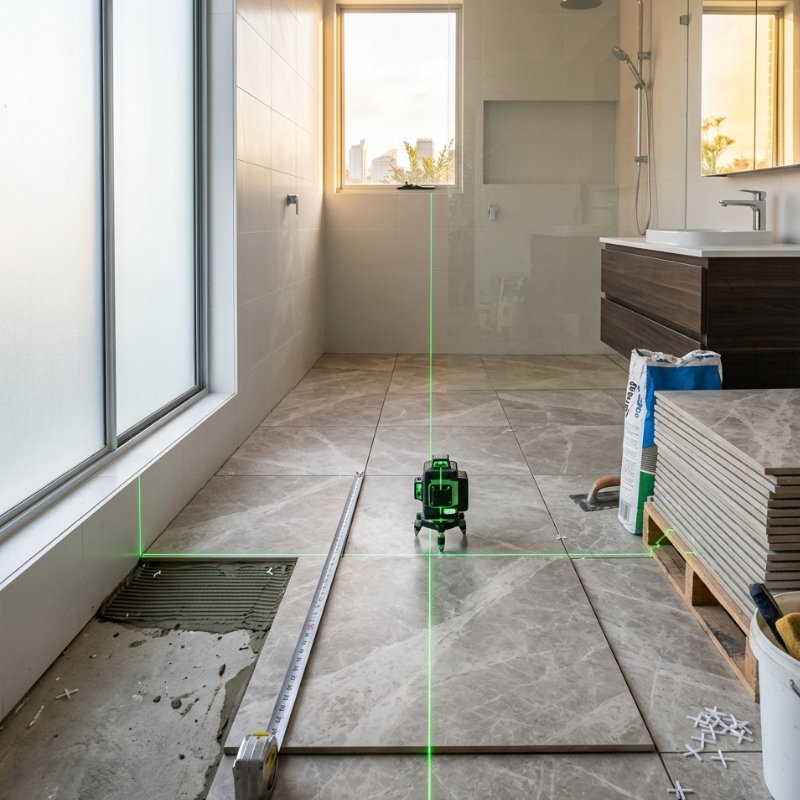
Flat surfaces are a tiler’s dream — they can get right to it. But those cracked, uneven, or dusty surfaces? They need levelling, patching, or maybe re-sheeting before the first tile even gets laid. Every extra hour and supply — levelling stuff, primers, backer boards — adds up fast.
What You Can Do
- Use a long straight-edge to check the floor before asking for quotes.
• Point out any dips, bumps, or loose bits so tilers can price any extra work upfront.
• Renovating? Be ready for hidden issues when you rip up old flooring.
2. Tile Type: Ceramic, Porcelain, Natural Stone or Mosaic
Each tile type needs its own care:
| Tile Material | Handling Difficulty | Cost Impact |
| Standard ceramic | Low | Easy to cut, uses less adhesive |
| Porcelain (dense) | Medium–High | Tougher to cut, heavier, needs special blades |
| Natural stone (marble, travertine) | High | Fragile, needs matching and sealing |
| Mosaic sheets | Medium | Needs careful alignment, more grout |
Tilers spend more time and resources on denser or fragile tiles for those clean cuts and perfect edges.
3. Tile Size and Layout Complexity
Big tiles, like those over 600 × 600 mm, mean fewer grout lines but need a super-flat surface and special lifting tools. If you want fancy patterns like herringbone, expect more planning, cutting, and waste.
4. Access and Site Logistics
Sydney’s tight spaces — think terraces, apartments, and troublesome parking — affect quotes. If tilers have to haul stuff up stairs or wrangle with permits for bins, costs go up. Easier access at ground level? That’s usually cheaper.
5. Waterproofing Requirements and Compliance
Wet areas like bathrooms need waterproof membranes that meet Australian Standards. If what’s there fails an inspection, it’s gotta be redone — long before tiling starts. Labour, materials, and wait times for inspections all stack up. And no reputable tiler wants to cut corners here.
*(Check out NSW Fair Trading for official info on waterproofing.)
6. Grout and Adhesive Selection
Low-cost quotes might stick to a basic grey grout and a standard adhesive. But if you choose epoxy grout for stain resistance or a high-flex adhesive for heated floors, it’ll cost more per bag and might need more skill to apply.
7. Edge Details: Mitred, Trimmed, or Pencil-Rounded?
Mitred corners — especially with porcelain — need precise cuts and special tools. Trims in aluminium or brass go up faster but add material costs. Pencil-round edges on stone? They might need to be done at the factory. Quotes can hide huge differences in quality with edge finishing.
8. Removal and Disposal of Existing Flooring
Taking out old tiles, vinyl, or glued timber can be tough work. If there’s a thick adhesive layer on the subfloor, expect jackhammers and dust control tools. Disposal fees vary by area and waste type. Find out if demolition and disposal are included or as extra costs.
9. Movement Joints and Expansion Requirements
Sydney’s changing temperatures and clay soils mean movement. Good installers include movement joints and silicone in walls. Skipping these can mean future cracks and repairs. Materials and time here add up over multiple rooms.
10. Site Preparation and Protection
Covering other rooms, masking skirting boards, or setting up dust control isn’t free. Busy homes with nice timber halls usually need more protection than places still under construction.
11. Project Timeline and Labour Scheduling
If tilers are working around other trades, waiting on waterproofing cures, or splitting jobs for your holiday schedule, productivity drops. Weekend work, rush jobs, or working off-hours? That costs more.
12. Warranty and Post-Install Support
Good tilers include follow-up visits for silicone touch-ups, spare tiles, and warranty docs. Cheap operators don’t tend to plan for after-care. Paying a bit more for a proper workmanship warranty is probably worth it.
Quick Look-Up Table: Minor vs Major Cost Drivers
Here’s a quick guide to see which costs might seriously affect your final bill.
| Cost Driver | Complexity Impact | Minor When | Major When |
| Substrate prep | High | New and level | Old with cracks |
| Tile size | Medium | Standard 300 × 300 mm | Large-format 1200 × 600 mm |
| Pattern/layout | Medium | Straight stack | Herringbone/diagonal |
| Waterproofing | High | Dry areas | Wet areas like balconies |
| Access | Medium | Easy driveway | Tight apartment spaces |
| Grout type | Low–Med | Basic cement | Epoxy, colour-matched |
| Demolition | High | Bare concrete | Thick tile bed on timber |
| Edge finish | Low–Med | Basic trim | Mitred porcelain |
| Timeline pressure | Med–High | Normal weekday | Weekend/late shifts |
| Warranty scope | Low | No call-backs | 7-year workmanship |
Just because something’s “Low” doesn’t mean it’s free — but it won’t usually double a quote alone. Add up enough “Lows,” though, and you might be looking at a big price bump.
How to Read a Quote Like a Pro
- Check the Square-Metre Rate
See what’s actually included: adhesive, grout, primer, waterproofing, etc. - Look for Assumptions
Terms like “substrate assumed level” put the risk on you. Ask for hourly rates if assumptions aren’t right. - Ask for Product Spec Sheets
Make sure adhesive, grout, and membrane meet Australian Standards. Dodgy imports could void warranties. - Clarify Site Responsibilities
Who’s handling the cleanup? Who’s protecting the rest of the house? Small details can add up to big bills. - Compare Apples with Apples
One guy’s mitred edges aren’t another’s PVC trim. Match up scopes before deciding on the price.
Common Mistakes to Avoid
- Choosing Based Only on Price – Hidden exclusions can make “cheap” costly later.
• Ignoring Warranty – That $500 saved today might mean a headache tomorrow.
• Buying Before Measuring – Waiting for a cut plan can save money on tile oversupply.
• DIY Demolition Can Backfire – Wrong jackhammer settings could crack the subfloor and inflate costs.
FAQs
1. Does a higher square-metre rate always mean better quality?
Not really, but if it’s super low, something’s probably missing. A mid-range rate with detailed prep, waterproofing, and a warranty? That’s usually a better bet.
2. Is epoxy grout worth the extra cost?
It’s great for resisting stains and mould, especially in showers. If lower maintenance is the goal, then yes, it’s worth considering.
3. How do I cut costs without losing quality?
Stick with simple layouts and standard tiles. Make sure the surface is spotless and level to cut down on prep time.
4. Why are balconies or outdoor areas pricier than tile?
They call for weatherproofing, flexible adhesives, and extra checks to handle Sydney’s elements. It’s worth it to do it right and avoid leaks.
5. Can I buy my own tiles to save cash?
You could avoid some markup, but make sure there’s enough for cuts and mishaps. Managing deliveries and returns is then up to you.
Final Thoughts
Getting a grip on how these 12 factors affect costs, materials, and rules helps you make fair comparisons. It’s not just about the lowest sticker price — look at the full scope, solid materials, and warranty details. Sorting out assumptions upfront can save both money and headaches. For tricky surfaces, wet areas, or complicated patterns, hiring pros who charge for quality is usually a smart long-term choice.


